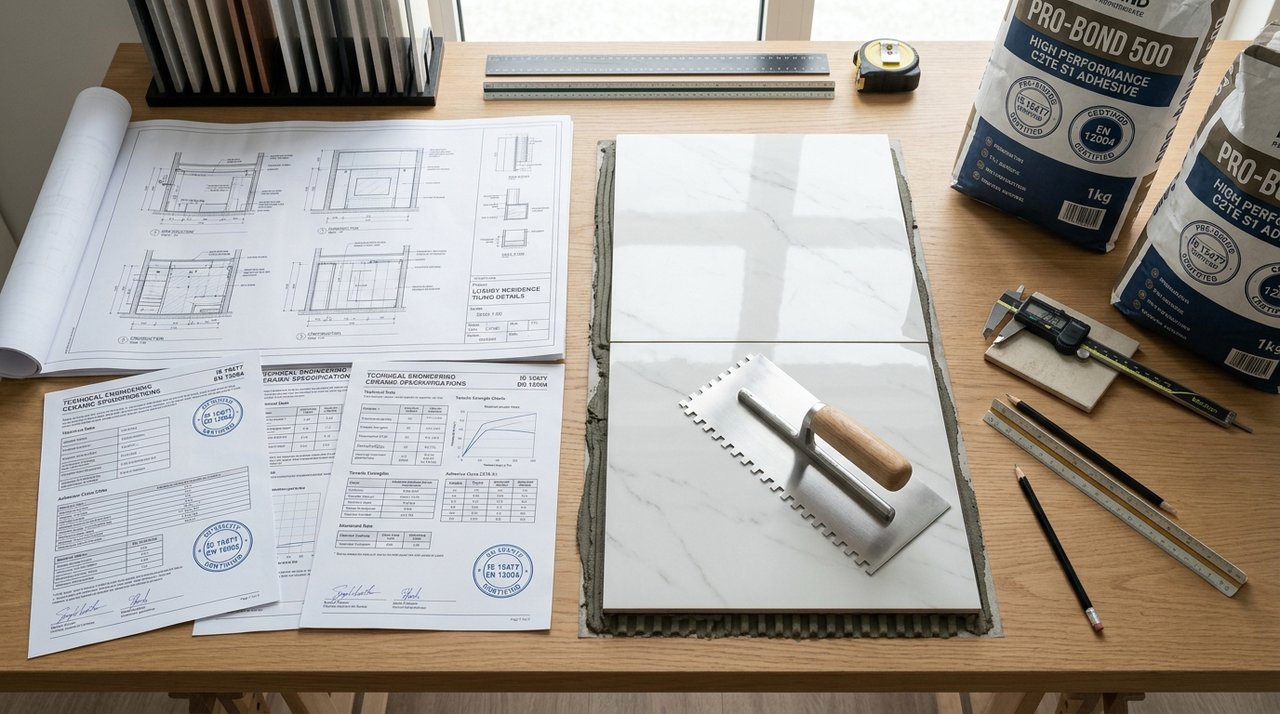
Choosing the wrong grade of adhesive—such as using a basic floor adhesive to fix heavy vitrified slabs on a sunny exterior facade—can lead to disastrous tile detachment, safety hazards, and exorbitant renovation expenses.
Both the Bureau of Indian Standards (IS 15477 : 2019) and the globally respected European Standard (EN 12004) establish rigorous technical criteria to help architects, engineers, contractors, and home builders select the exact formulation engineered for their specific tile size, porosity, and installation environment.
Part 1: Decoding European Standards (EN 12004) — What Do C, T, E, and S Mean?
The European Standard (EN 12004) classifies adhesives using an alphanumeric code system based on two primary factors: the binder chemistry and its mechanical performance characteristics.
1 The Binder Categories (First Letter)
- C = Cementitious Adhesive: The most common single-component dry powder adhesive mixed with water on-site. Formulated with Portland cement, 100% pure graded quartz silica, and redispersible polymers.
- D = Dispersion Adhesive: Ready-to-use paste adhesive made with organic water-based polymeric binders.
- R = Reaction Resin Adhesive: Two-component or three-component chemical adhesives (such as Epoxy Tile Grout & Joint Fillers) that cure through chemical cross-linking. Impermeable, waterproof, and acid-resistant.
2 Strength Classes (The Numbers: 1 vs. 2)
- Class 1 (Normal Adhesion): Standard bond strength with a minimum tensile adhesion of 0.5 N/mm². Ideal for internal floor applications with high-porosity ceramic tiles.
- Class 2 (Improved Adhesion): High-performance polymer-modified adhesive offering double the strength (minimum tensile adhesion of 1.0 N/mm²). Premium formulations like Gressbond reach up to 2.30 N/mm² tensile and 2.40 N/mm² shear strength.
3 Performance Characteristics (Optional Letters: T, E, F)
- T = Slip Resistance (Thixotropic): Prevents vertical slippage (≤ 0.5mm slip). Crucial for wall tiling so heavy tiles remain firmly in place without sliding down before setting.
- E = Extended Open Time: Gives the mason an extended window (minimum 30 minutes; up to 45 minutes in Gressbond formulations) between spreading mortar and embedding tiles without skin formation.
- F = Fast Setting: Rapid-curing formulations designed for quick emergency commercial turnarounds.
4 Deformability / Flexibility (S1 & S2)
- S1 = Deformable Adhesive: Can bend and flex between 2.5 mm and 5 mm without cracking. Essential for large-format slabs, heated floors, and sunny balconies subject to thermal shock.
- S2 = Highly Deformable Adhesive: Extreme flexibility (exceeding 5 mm deflection) for high-rise external facades, flexible wood/plywood substrates, and vibrating areas.
C = Cementitious powder • 2 = Improved high adhesion • T = Thixotropic (slip-resistant for vertical walls) • E = Extended 45-minute open time • S1 = Deformable flexibility to absorb thermal expansion.
Part 2: Understanding Indian Standards (IS 15477 : 2019)
In India, the Bureau of Indian Standards (BIS) updated the tile adhesive specification to IS 15477 : 2019, categorizing adhesives into five distinct types (Type 1 to Type 5) based on tile porosity, dimensions, and installation substrates:
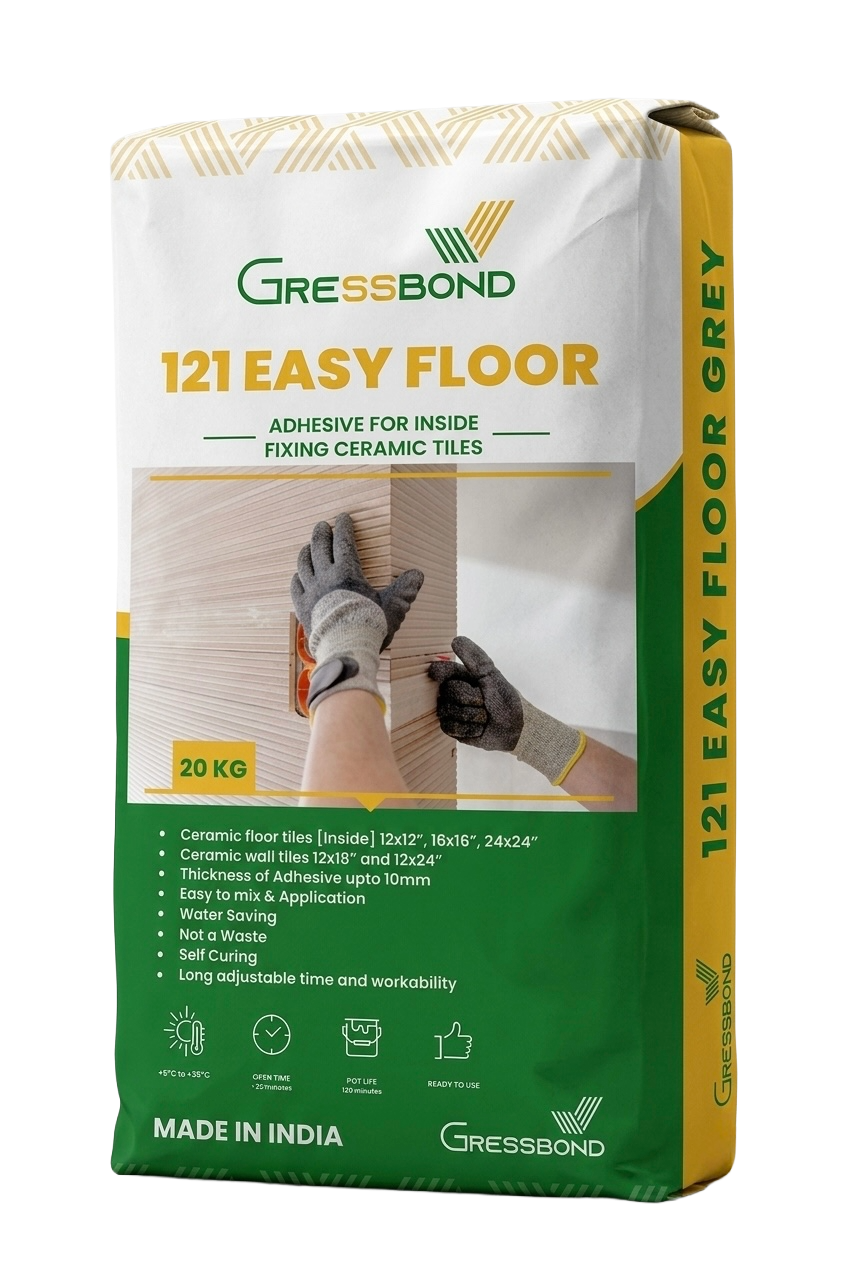
Gressbond 121 Easyfloor
Target Tiles: Designed for high-porosity ceramic tiles (water absorption > 6%), clay tiles, and terracotta of small-to-medium sizes on internal floors and bathroom walls.
View 121 Easyfloor Specifications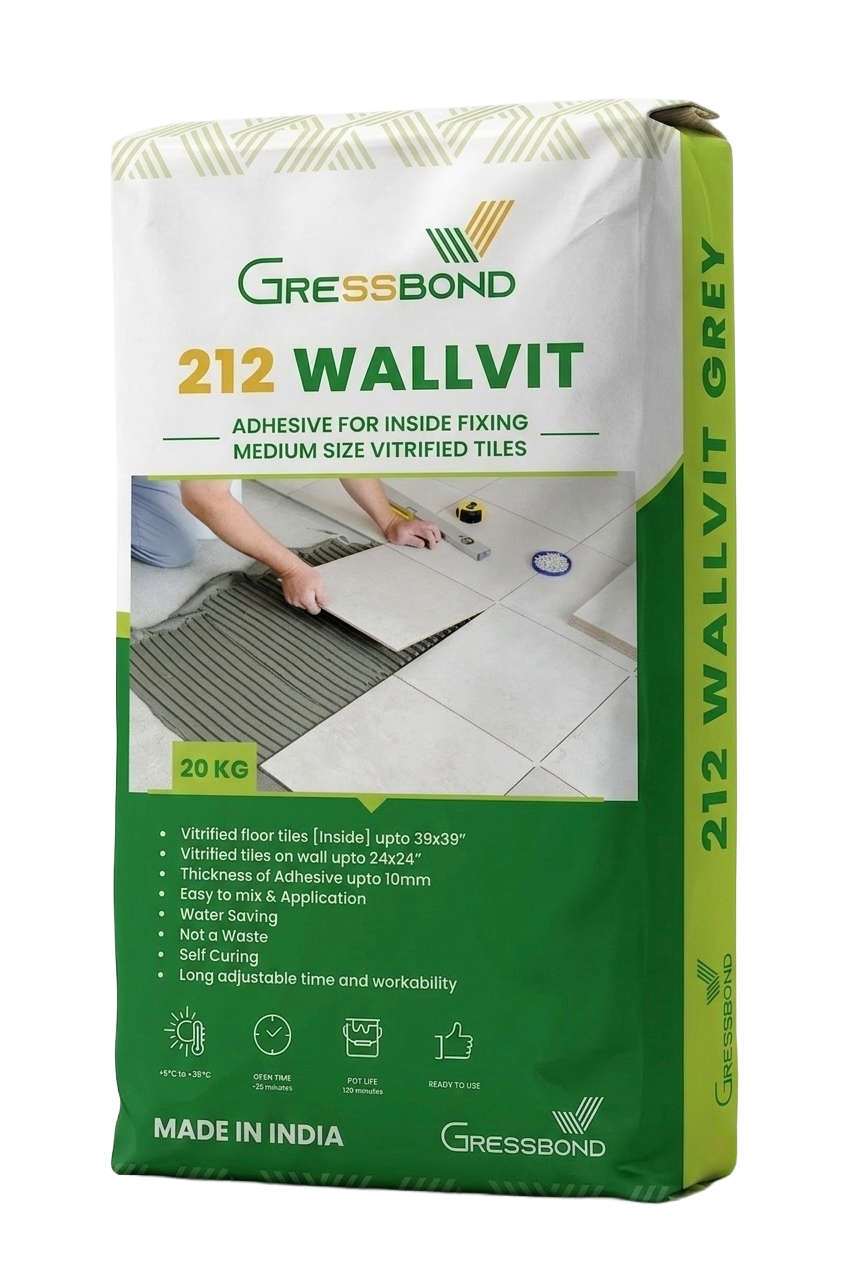
Gressbond 212 Wallvit
Target Tiles: Engineered for low-porosity vitrified and semi-vitrified tiles (GVT/PGVT) on internal floors, vertical walls, and internal tile-on-tile renovation projects.
View 212 Wallvit Specifications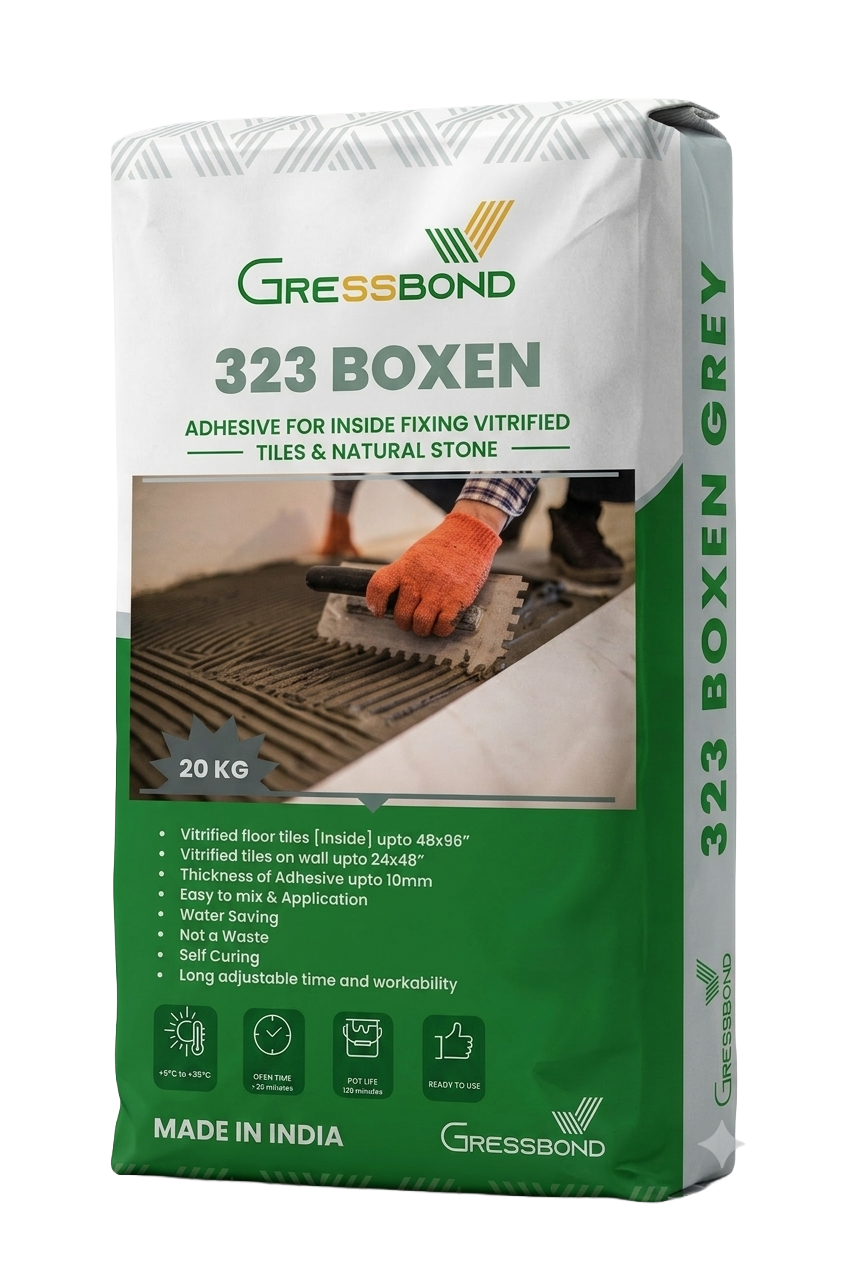
Gressbond 323 Boxen
Target Tiles: High-polymer modified adhesive for natural stone, granite, marble, large vitrified tiles, and external wall cladding exposed to sun, rain, and temperature variations.
View 323 Boxen Specifications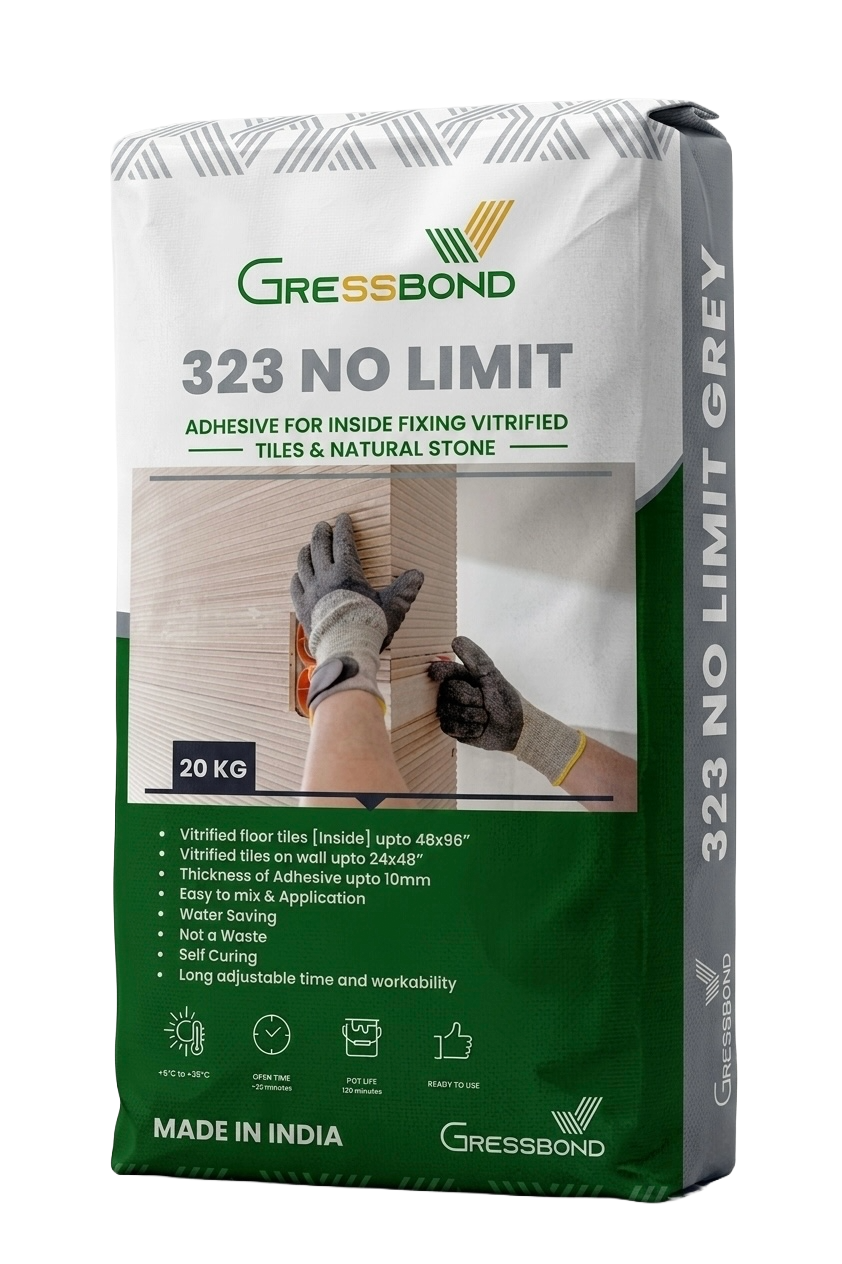
Gressbond 323 No Limit
Target Tiles: High-flexibility S1 classification for fixing large-format slim porcelain slabs and heavy stones on drywalls (gypsum board, Bison board, plywood) and high-vibration structural floors.
View 323 No Limit Specifications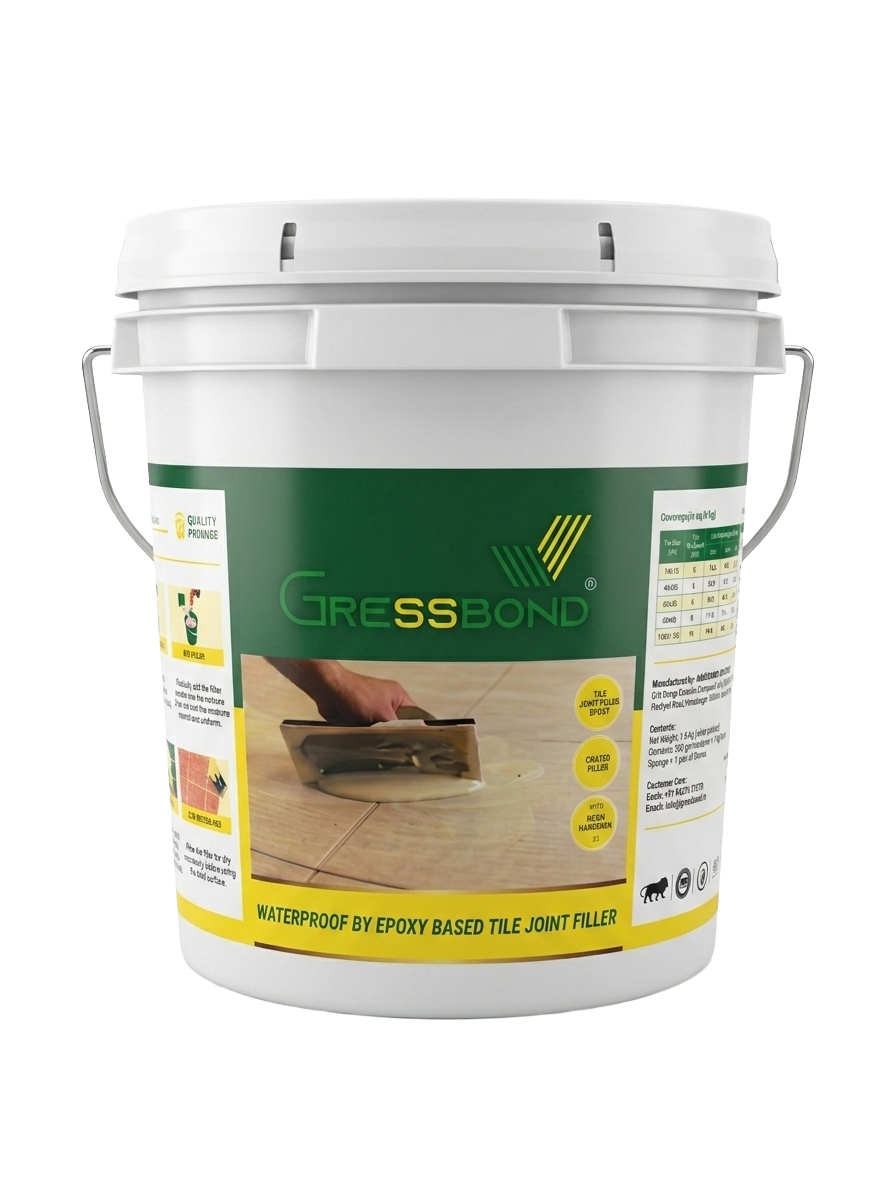
Gressbond Epoxy Tile Joint Filler
Target Areas: 3-part reaction resin system for swimming pools, luxury bathrooms, kitchens, and industrial commercial spaces requiring acid resistance and zero water ingress.
View Epoxy Joint Filler SpecificationsPart 3: Quick Comparison & Application Guide
Match the right Indian & European standard to your exact tiling requirement.
| IS 15477 Grade | Equivalent EN 12004 | Recommended Product | Best Suited Tile Types | Recommended Application Area |
|---|---|---|---|---|
| Type 1 | C1T / C1TE | 121 Easyfloor | Porous Ceramic Tiles, Terracotta, Small Wall Tiles | Internal residential floors, kitchen backsplashes, bathroom walls |
| Type 2 | C2T / C2TE | 212 Wallvit | Vitrified Tiles, GVT/PGVT, Medium Natural Stones | Internal floors & walls, Tile-on-Tile renovation, commercial offices |
| Type 3 | C2TE S1 | 323 Boxen | Large-Format Vitrified Slabs, Marble, Granite | External walls/elevation, balconies, swimming pools, wet areas |
| Type 4 | C2TE S1 / S2 | 323 No Limit | Heavy Slabs, Composite Marble, Slim Porcelain | Drywall partitions (Bison board, Gypsum), lift lobbies, high-traffic zones |
| Type 5 | C2TE S2 / R2T | Epoxy Grout | Glass Mosaics, Heavy Exterior Stone Cladding | High-rise external facades, extreme thermal zones, industrial floors |
3 Simple Questions to Pick the Right Adhesive Every Time
If it is a porous red-body ceramic tile, Type 1 (C1T) is sufficient. If it is a dense, non-porous vitrified tile (GVT) or natural stone, you must start at Type 2 (C2TE) or higher.
For indoor floors, standard setting works well. For vertical walls, always ensure the grade includes "T" (Slip Resistance). For outdoor terraces or elevation exposed to sun and rain, step up to Type 3 (C2TE S1) to handle thermal shock.
For cured cement plaster or concrete, Type 1 to Type 3 work seamlessly. For fixing new tiles directly over an existing floor (Tile-on-Tile), choose at least Type 2 or Type 3.
Why Raw Material Purity Matters Across All Grades
Regardless of whether you choose a Type 1 or Type 4 adhesive, the technical grade on the bag is only as reliable as the raw materials inside. At Gressbond Adhichem, every grade we manufacture is formulated with 100% pure graded silica—completely free from river sand and fly ash. This guarantees that our products consistently exceed IS 15477 : 2019 benchmarks for tensile strength, shear strength, and lifetime durability.
Need Advice on the Right Adhesive Grade for Your Site?
Consult our technical engineering desk for project specifications, substrate inspection, and adhesive grade recommendations.